Bulk Recovery Cases: All-in-One Affordable Solutions
Recover unpaid commercial dues, unfreeze working capital, and resolve multiple delinquent corporate accounts simultaneously through advocate-drafted bulk legal notices, statutory MSME enforcement, and summary recovery.
Table of Contents
Swipe →Quick Answer
Recovery of unpaid dues for business across multiple defaulting debtors is achieved through a structured bulk legal notice framework supported by statutory enforcement under Indian commercial statutes. Creditors issue advocate-drafted statutory demand notices simultaneously to defaulting buyers, establishing a strict 15-day compliance window and invoking compound interest under Section 16 of the MSMED Act, 2006, summary suits under Order 37 of the Code of Civil Procedure, 1908, or criminal prosecution under Section 138 of the Negotiable Instruments Act, 1881. Consolidating multi-debtor commercial claims into an all-in-one recovery system lowers legal costs by up to 85% and prompts rapid out-of-court settlements without protracted trial litigation.
1. The B2B Unpaid Dues Challenge in Indian Commerce
Delinquent accounts receivable threaten commercial solvency, cash velocity, and working capital. In India's B2B ecosystem, suppliers, distributors, manufacturers, and agencies face systemic defaults. Unlike single consumer disputes, commercial creditors face portfolio delinquency—managing dozens of overdue invoices across diverse jurisdictions.
When debtors defer payments beyond agreed credit windows, vendors struggle to meet payroll schedules, default on statutory GST liabilities, and incur bank overdraft interest. Over 68% of MSMEs report that delayed buyer payments restrict operational growth and daily production.
Traditional collection calls yield diminishing returns after 60 days, while hiring bespoke litigation counsel for each invoice is cost-prohibitive. Modern commercial recovery requires an all-in-one programmatic methodology executing advocate-drafted statutory demands in bulk while cutting per-case overhead costs.
2. Indian Commercial Statutory Framework for Debt Recovery
Indian commercial law equips corporate creditors with robust statutory instruments to compel defaulting buyers to clear delinquent liabilities:
The MSMED Act, 2006 (Sections 15–18)
Section 15 mandates payment within 45 days. Section 16 imposes mandatory compound interest at 3x the RBI repo rate with monthly rests. Creditors file delayed payment petitions with the MSEFC under Section 18.
Order 37, Code of Civil Procedure, 1908
Enables summary suits for liquidated debts and written contracts. Defendants cannot contest automatically and must apply for leave to defend within 10 days of summons.
Negotiable Instruments Act, 1881 (Sec. 138 & 141)
Criminalizes cheque dishonor for enforceable debts. Section 141 imposes vicarious personal liability on managing directors and partners in charge of corporate operations.
Commercial Courts Act, 2015 & Section 12A
Provides dedicated commercial courts with strict timelines. Section 12A mandates Pre-Institution Mediation and Settlement (PIMS) before instituting a commercial suit.
For corporate debts exceeding ₹1 Crore, creditors can issue Form 3/Form 4 statutory demand notices under Section 8 of the Insolvency and Bankruptcy Code (IBC), 2016, preceding Section 9 insolvency.
3. Limitations of Single-Case Litigation
Managing multiple delinquent client balances through separate lawsuits creates operational bottlenecks and cost overruns:
High Individual Retainers: Traditional advocates charge ₹15,000–₹35,000 per notice. For 40 debtors, upfront fees exceed ₹8 Lakhs before recovering any capital.
Multi-City Administrative Friction: Commercial debtors reside in different jurisdictions, requiring extensive coordination across multiple local registries.
Debtor Delay Tactics: Defaulters know creditors rarely file full civil suits for mid-sized balances, stalling until the 3-year limitation period elapses.
Inconsistent Documentation: Fragmented invoices and missing delivery challans weaken evidentiary weight during judicial examination.
4. All-in-One Bulk Recovery Architecture & Economics
An all-in-one bulk recovery platform combines legal expertise, document parsing, advocate oversight, and postal logistics into a unified digital infrastructure, lowering costs by 70% to 85%:
- Batch Ingestion: Creditors upload ledgers, invoices, purchase orders, and transport receipts in unified digital batches.
- Algorithmic Triage: The system segments debtors into aging buckets (30, 60, 90, 180+ days) and verifies corporate status on MCA and GST portals.
- Advocate Dynamic Drafting: Panel advocates customize legal notices with invoice breakdowns, delivery dates, and compound interest calculations.
- Dual-Track Dispatch: Notices are printed on advocate letterheads, posted via RPAD, and transmitted electronically via email and WhatsApp.
- Tracking & Proof of Service: Real-time postal logs generate delivery certificates admissible under Section 65B of the Evidence Act / Section 63 BSA.
- Settlement Conciliation: Pre-litigation desks negotiate binding installment plans and compromise deeds without court fees.
5. Strategic Comparative Matrix: Recovery Approaches
Evaluating recovery models requires examining legal enforceability, cost efficiency, compliance, and settlement velocity across common market alternatives:
| Evaluation Metric | Traditional Law Firm (Single Suit) | Collection Agencies (Tele-callers) | All-in-One Bulk Legal Recovery |
|---|---|---|---|
| Cost per Defaulting Account | ₹15,000 – ₹50,000+ per file | 15% – 35% commission + retainers | Affordable flat-rate bulk pricing |
| Legal Authority & Letterhead | Yes (Single Advocate Letterhead) | None (Informal call center notices) | High Court / District Bar Advocate Letterhead |
| Statutory Penal Interest | Manually calculated | Cannot legally enforce | Automated 3x RBI Repo compound interest (MSMED Act) |
| Admissibility as Pre-Suit Notice | High | Zero (Inadmissible in Court) | 100% Admissible under CPC, MSMED Act & NI Act |
| Multi-Debtor Scalability | Very Poor (Manual bottlenecks) | Moderate | High (10 to 500+ notices simultaneously) |
| Average Settlement Velocity | 6 – 24 Months | Unpredictable / Low conversion | 15 – 45 Days (Pre-Litigation Settlement) |
| Regulatory & Brand Risk | Low | Severe (Harassment complaints) | Zero (Full compliance with Bar Council & RBI norms) |
6. Commercial Evidentiary Audit Checklist
Enforceability requires rigorous documentary verification. Creditors must audit eight evidentiary records before dispatching notices:
1. Master Tax Invoices
GST-compliant invoices with GSTINs, HSN/SAC codes, itemized values, and authorized signatures.
2. Purchase Orders & Contracts
Signed contracts, work orders, purchase orders, or email confirmations of commercial scope.
3. Proof of Delivery (POD)
Goods Received Notes, transporter receipts (LR/Bilty), e-Way bills, or digital sign-offs.
4. Reconciled Ledgers
Statements of Account showing running balances, historic part-payments, and net principal sums.
5. Debt Acknowledgments
Balance confirmations, email admissions, or WhatsApp messages acknowledging liability under Section 18 Limitation Act.
6. Dishonored Cheques & Memos
Dishonored cheques and bank return memos citing insufficient funds within the 30-day statutory window.
7. Prior Demand Letters
Overdue reminders and payment schedules demonstrating prior amicable collection efforts.
8. Debtor Corporate Data
MCA master records, Corporate Identification Number (CIN), registered address, and active Director DINs.
7. Step-by-Step Bulk Recovery Workflow
Executing bulk recovery of unpaid dues for business follows a standardized seven-stage procedure:
Portfolio Ingestion & Aging Triage
Segment delinquent invoices by aging bands (30, 60, 90, 180+ days) and confirm claimant MSME Udyam status.
Corporate Verification & Address Sanitization
Cross-check debtor records against MCA and GST databases to target registered corporate offices and active directors.
Advocate Notice Drafting & Interest Computation
Advocates draft tailored notices detailing transaction histories, invoices, and statutory compound interest under the MSMED Act.
Omnichannel Dispatch
Notices are sent via India Post RPAD and transmitted concurrently to corporate emails and director WhatsApp numbers.
Consignment Tracking & Delivery Proof Archival
Track postal consignments in real time, securing delivery slips compliant with Section 65B Evidence Act / Section 63 BSA.
15-Day Active Settlement Negotiation
Conduct structured settlement dialogues during the compliance window, executing formal compromise deeds and payment plans.
Multi-Track Judicial Escalation
Escalate uncooperative debtors to MSME Samadhaan, file Section 138 criminal complaints, or institute Order 37 summary suits.
8. Bulk Recovery Lifecycle Infographic
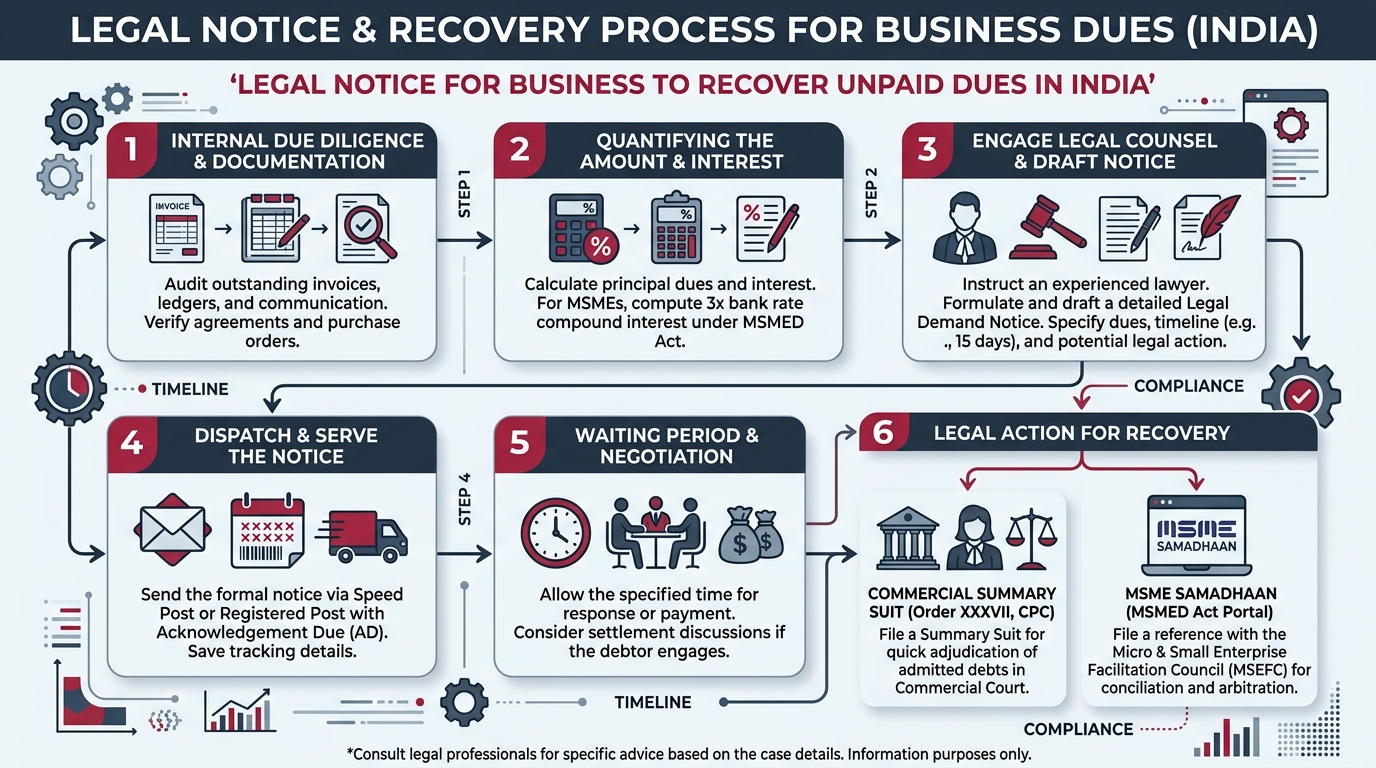
Figure 1: End-to-end commercial bulk debt recovery lifecycle from portfolio ingestion and advocate drafting to omnichannel dispatch, pre-litigation settlement, and statutory judicial escalation.
9. Essential Elements of an Enforceable Commercial Legal Notice
An enforceable statutory commercial notice drafted by an advocate must incorporate eight foundational components:
- Bar Council Letterhead: Issued under an advocate's professional letterhead, displaying enrollment number and chamber address.
- Corporate Cause Title: Names the debtor entity, Corporate Identification Number (CIN), registered office, and directors.
- Contractual Background: Summarizes the commercial relationship, purchase orders, deliverables, and payment milestones.
- Itemized Ledger Table: Details unpaid invoice numbers, billing dates, values, part-payments, and net principal balance.
- Statutory Invocations: Cites Section 15 & 16 MSMED Act, Section 138 NI Act, or Order 37 CPC.
- Compound Interest Calculation: Quantifies accrued interest at statutory rates (such as 3x RBI repo rate) up to notice issuance.
- 15-Day Ultimatum: Establishes a mandatory 15-day compliance window from delivery receipt to settle outstanding dues.
- Litigation & Cost Warning: States that non-compliance will trigger civil/criminal litigation with legal costs claimed from the debtor.
10. Multi-Track Judicial Escalation Pathways
When debtors fail to settle within 15 days, claims escalate through four specialized statutory channels:
Pathway 1: MSME Samadhaan & MSEFC Arbitration
Udyam-registered creditors file petitions under Section 18 of the MSMED Act. The Facilitation Council conducts conciliation, followed by statutory arbitration. Under Section 19, buyers must deposit 75% of awarded dues before challenging awards in court.
Pathway 2: Criminal Complaint under Section 138 NI Act
For dishonored cheques, creditors issue a statutory 30-day notice. If unpaid after 15 days, a criminal complaint is filed within 30 days under Section 142. Courts can award up to 20% interim compensation under Section 143A.
Pathway 3: Summary Suit under Order 37 CPC
For liquidated debts arising from written contracts, summary suits prevent frivolous defenses. If defendants fail to secure leave to defend within 10 days of summons, the court grants an immediate decree.
Pathway 4: Corporate Insolvency under Section 9 IBC
For undisputed corporate operational debts exceeding ₹1 Crore, creditors serve Form 3/Form 4 demand notices under Section 8. Failure to pay within 10 days allows filing for insolvency before the NCLT under Section 9.
11. Debt Aging, Interest Rates & Commercial Limitation Matrix
Managing accounts receivable across a delinquent portfolio requires mapping invoice aging directly to legal remedies, interest calculations, and statutory limitation deadlines:
| Aging Bucket | Default Risk | Primary Legal Remedy | Applicable Interest Provision | Limitation & Escalation Strategy |
|---|---|---|---|---|
| 0 – 30 Days Overdue | Low | Account reconciliation & formal dunning reminders | Standard contractual credit terms | Limitation safe (3 years remaining). Verify delivery documentation. |
| 31 – 60 Days Overdue | Moderate | Pre-legal demand letter referencing MSMED Act | 3x RBI repo rate compound interest begins at Day 46 | Request balance confirmation letter to secure formal written acknowledgment. |
| 61 – 90 Days Overdue | High | Advocate statutory demand notice via RPAD & Electronic Service | Compound interest with monthly rests enforced | 15-day ultimatum. Notice serves as prerequisite for Section 12A mediation. |
| 91 – 180 Days Overdue | Severe | MSME Samadhaan petition / Order 37 Summary Suit | Statutory penal interest + claimed legal damages | Check cheque bounce 30-day filing limits; initiate Section 12A pre-suit mediation. |
| 180+ Days Overdue | Critical | NCLT Section 9 Demand / Civil Execution / Commercial Suit | Full compound interest claim + litigation costs | Monitor 3-year limitation window under Article 14 Limitation Act; execute immediate judicial filings. |
12. Frequently Asked Questions
Statutory Authorities & Regulatory References
References and statutory portals: [1] Ministry of Micro, Small and Medium Enterprises (MSME). [2] MSME Samadhaan Delayed Payment Monitoring Portal. [3] Insolvency and Bankruptcy Board of India (IBBI). [4] National Company Law Tribunal (NCLT). [5] Ministry of Corporate Affairs (MCA). [6] India Code Digital Legislative Repository. [7] National Consumer Disputes Redressal Commission (NCDRC).
Start Bulk Notice Intake
Upload your delinquent debtor ledger. Our panel advocates handle batch legal notice drafting, postal dispatch via India Post RPAD, and tracking.
Fast 48-Hour Legal Dispatch
Client Reviews
"We had 38 defaulting B2B distributors owing over ₹64 lakhs. Legal Recovery handled the entire bulk legal notice dispatch in 48 hours. Within 30 days, we recovered 72% of our outstanding dues without stepping into a courtroom."
More Commercial Debt & Legal Recovery Guides
Recovery of Unpaid Dues
Detailed statutory guide on recovering outstanding commercial debts, B2B unpaid invoices, and vendor defaults under Indian law.
MSME Samadhaan vs Legal Notice
Compare the advantages, timelines, and enforcement powers of the MSME Facilitation Council versus advocate statutory notices.
Civil Suit for Money Recovery
Comprehensive breakdown of Order 37 CPC summary suits, court fees, limitation periods, and execution decrees in Indian courts.
Section 138 Cheque Bounce Notice
Strict statutory timelines, mandatory notice drafting requirements, and criminal magistrate complaint filing under the NI Act.
Send a Legal Notice Online
Explore our full suite of advocate-drafted legal notice services, physical speed post dispatch, and digital tracking for businesses.
Consumer Complaint Guide
Procedural walkthrough for escalating deficiency in service and unfair trade practices to the District and State Consumer Commissions.

Legal Recovery is India's trusted commercial recovery and legal tech platform. Founded in 2022 and headquartered in New Delhi, Legal Recovery has counselled 15,000+ businesses and individuals on debt recovery, commercial dispute resolution, and contractual enforcement. Legal Recovery focuses on fast out-of-court settlements and connects you with top panel advocates.